

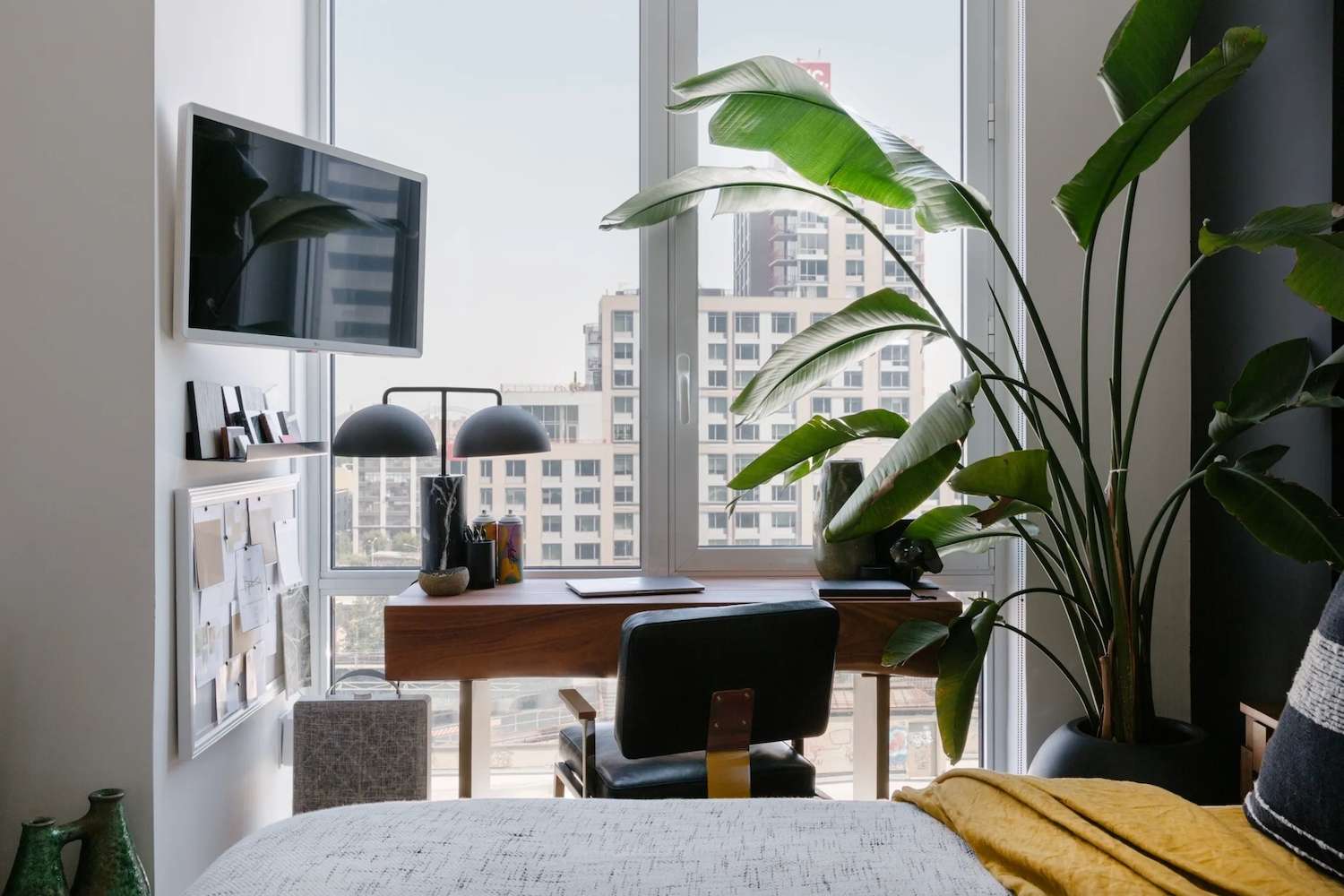
A desk needs room for someone to use it, not just a gap wide enough to fit its top. The chair has to pull back, the laptop needs a sensible position and cables have to reach a socket without crossing the route through the apartment. Those details determine whether a corner becomes a useful workplace or another cramped surface.
Before looking at desks, identify what currently occupies the space. Some belongings may belong elsewhere in the apartment, while others are used so rarely that mini storage could be worth considering. The aim is to create a working area you can use regularly without making the rest of the home awkward to live in.
Give the desk enough room to function
Start with the activities the desk must support. A laptop and notebook require a different arrangement from a separate monitor, keyboard and papers spread out for reference. Mark the proposed footprint on the floor and include the space occupied by the chair when someone is seated.
Look at the room from that position. A window directly behind the screen can create a difficult contrast, while one reflected in it can make the display hard to read. Try another angle before deciding that the only solution is to keep the curtains closed throughout the working day.
Storage immediately beside the desk should serve the work done there. Keep frequently used items within reach, but avoid filling the available shelves with things that have no connection to the working day. A printer used occasionally may not deserve the most convenient part of a small workspace.
Shared furniture can help when its limits are understood. A dining table may provide a generous surface, but it also needs to return to dining use. Give work materials a defined place to go afterwards, so clearing the table does not involve moving an unstable pile from one chair to another.
Move belongings according to how often they are used
Review cupboards and shelves before removing furniture. Suitcases, seasonal decorations and equipment reserved for occasional trips can occupy space that would be more useful for everyday items. Group them by how often you need them, rather than simply moving everything into the least visible corner.
Off-site storage is most useful when the items being moved have a reason to be kept and do not require frequent collection. MeSpace offers smaller lockers as well as larger units, so the space can be matched to the belongings involved. Measure bulky items and check the actual internal unit dimensions before booking.
Keep a written record of what leaves the apartment. If you expect to retrieve something for a particular season or trip, label it clearly and arrange it where it can be reached. Otherwise, a cupboard problem at home can turn into a difficult search elsewhere.
Once the desk is in place, consider what happens at the end of the working day. A drawer, lidded box or cupboard shelf can hold the laptop and papers until morning. Put charging equipment where it remains accessible, with cables contained so the chair and nearby doors can move freely.