

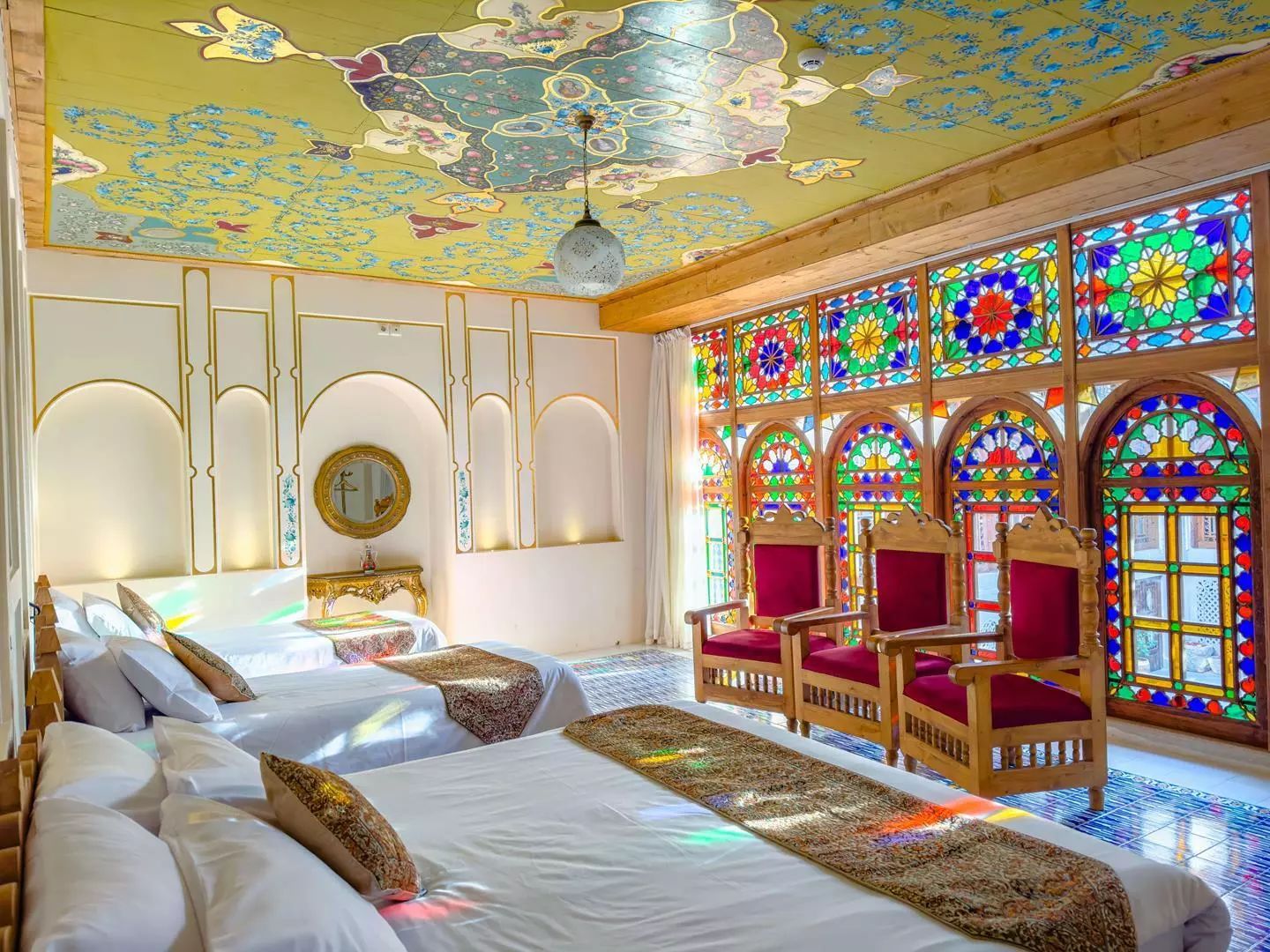
Some of the accommodations in Iran are not just places to sleep. They are gateways into the soul of the country. Step inside a restored mansion, a centuries-old caravanserai, or a quiet desert retreat, and you immediately feel the layers of history around you. The scent of rosewater drifting through a courtyard, the echo of footsteps along tiled corridors, the glow of lanterns against old brick walls. Each detail tells a story. In Iran, luxury is not only measured in fine service or soft linens, but in the privilege of staying in spaces shaped by traders, artisans, poets, and travelers of long ago. Here, tradition lives within architecture, comfort meets cultural depth, and every night becomes part of a journey that stretches far beyond the room you sleep in.
Below are ways to experience hospitality that honors the past while offering modern comfort. A perfect fit for travelers who want beauty, authenticity, and attentive service.
Boutique Hotels: Historic Houses Reborn
Across cities, wealthy merchant houses and great mansions have been lovingly restored into boutique hotels. These properties keep original features: inner courtyards, hand-painted ceilings, carved plasterwork and mirrored alcoves. And they are combined with crisp linens, thoughtful service, and modern amenities. A night in one of these houses feels like staying inside a living museum: you move from a sunlit courtyard into rooms where centuries of design meet contemporary comfort. Saraye Ameriha in Kashan, and Darbe Shazdeh in Shiraz are fine examples of a large historic houses carefully converted into boutique hotels, preserving architectural detail while providing five-star service.
Caravanserais: Sleep on the Silk Road
Caravanserais were the inns of the Ancient Silk Road: stone and brick complexes where merchants, pilgrims and their animals sheltered between long journeys. Today many have been restored as atmospheric boutique lodgings: thick mudbrick walls that hold cool air in summer, arched iwans that frame courtyards, and decorative vaulting that reveals the skill of generations of artisans. Staying in a caravanserai is a particular kind of time travel. You sleep where traders once compared textiles, spices and stories, and wake to a sky that has not changed much in hundreds of years. Karvanica Hotel in Kerman, Laleh Bistoun Hotel in Kermanshah, and Abbasi Hotel in Isfahan, for example, began life as caravanserais before their transformation into celebrated accommodations in Iran.
Desert Retreats: Nights of Sand and Silence
For a dramatically different experience, Iran’s desert caravanserais and eco-camps offer overnight stays beneath wide skies. Several restored caravanserais sit on the edges of deserts near Yazd and Kerman and welcome guests for a simple, striking night. Low light, local food served in the courtyard, and the silence of dunes beyond the walls. Zein-o-din Caravanserai, set on the desert route to Yazd, is a vivid example. It’s a Safavid-era rest stop that now allows travelers to sleep in the shadow of thick, sculpted walls and to watch the sun set over a landscape that shaped ancient travel and trade.
Artistic Intricacy and Architectural Value
What sets these accommodations in Iran apart is their craftsmanship. Ceilings painted with delicate floral patterns, muqarnas (stalactite-like plasterwork), tiled arches that reflect changing light, and wooden doors inlaid with geometric patterns are not mere decoration; they are the cultural language of place. Many restorations deliberately highlight traditional artisanship — local tilemakers, plasterers and carpenters — so guests encounter authentic detail at every turn. This attention to art and architecture turns a stay into a visual and tactile lesson in Persian aesthetics.
Sustainable Design: Old Solutions for New Challenges
Traditional Iranian architecture often embodies sustainable features: thick walls and windcatchers moderate indoor climate, courtyards create shaded microclimates, and local materials reduce environmental cost. Many modern restorations and new boutique projects adapt these techniques, combining passive cooling with efficient heating systems, water-wise gardens, and careful reuse of existing structures. The result is Iran accommodations that feel environmentally thoughtful because they are built on centuries of wisdom, elegance, efficiency, and beauty.
Service and the Overnight Experience
Beyond architecture, hospitality is central to your experience in such kinds of accommodations in Iran. Hosts in small boutique hotels and caravanserais pride themselves on attentive, personal service: home-cooked breakfasts, help arranging local guides, and storytelling over tea in the courtyard. In desert caravanserais, service is often warm and communal. These small, human details are what make a stay more than a photo opportunity; they make it meaningful. Ashrafieh Boutique in Shiraz, for instance, has won the hearts of many travelers with the genuine hospitality of the hosts.
Practical Ideas and Variations
If you seek luxury with history, consider a restored city mansion where breakfast is served in a painted salon. If you want drama, book a night in a desert caravanserai and rise early for sunrise on the dunes. Many caravanserais and historic houses fill quickly, especially in high season, so booking ahead will help you secure the room that best matches the experience you want.
In Short about Boutique Accommodations in Iran
Staying in Iran’s boutique hotels, caravanserais, and desert retreats is a chance to a unique ImmersiveIran experience and to sleep where history happened — without giving up comfort or service. These places blend artistic detail, architectural intelligence, and generous hospitality so every night becomes part of the trip’s story. Whether beneath a painted dome in a city courtyard or under a vast desert sky, the accommodation itself can be one of your most memorable cultural experiences.